Oil Demand to Stay Above 100 Million bpd Through 2040 - What It Means Now
Global Markets
The global energy transition is often talked about as a quick switch to clean energy. In reality, market data and long-term oil forecasts show a different picture. Crude oil is likely to stay a key part of the global economy for decades. Knowing why this baseline demand exists helps make sense of the gap between green energy headlines and how money actually moves in commodity markets.
People often mix up political goals with immediate changes on the ground. Electric vehicles and renewable energy are growing fast, but the existing transport and energy systems limit how quickly oil use can drop.
This analysis explains why oil demand remains high and how to read market signals during a long, gradual shift.
The Reality of the 100 Million bpd Floor
Global oil consumption recently crossed the 100 million barrels per day (bpd) threshold and shows little indication of falling below that level in the near future [1]. Institutional forecasts from OPEC project demand rising toward 116 million bpd by 2045 [1]. This persistence is driven by oil's continued use in heavy transport, manufacturing, and petrochemical production.
Oil remains a core input for:
Heavy transportation
Industrial production
Petrochemical manufacturing
Construction and infrastructure
Breaking the link between cash and oil is much tougher than those fancy policy nerds think. Rich nations use less now; however, developing countries are charging forward. New factory growth in those spots wipes out any savings elsewhere; that keeps the total global oil use sky-high for the world.
The energy transition market impact to date has reduced growth rates rather than eliminating demand. As a result, the 100 million bpd level functions as a structural floor rather than a temporary peak.
Why the Peak Oil Narrative Is Often Misleading
Predictions of “peak oil” have circulated for decades, yet the projected date continues to shift forward. The International Energy Agency (IEA) suggests a peak could occur before 2030, assuming aggressive policy implementation and sustained behavioral change that has not yet fully materialized [2].
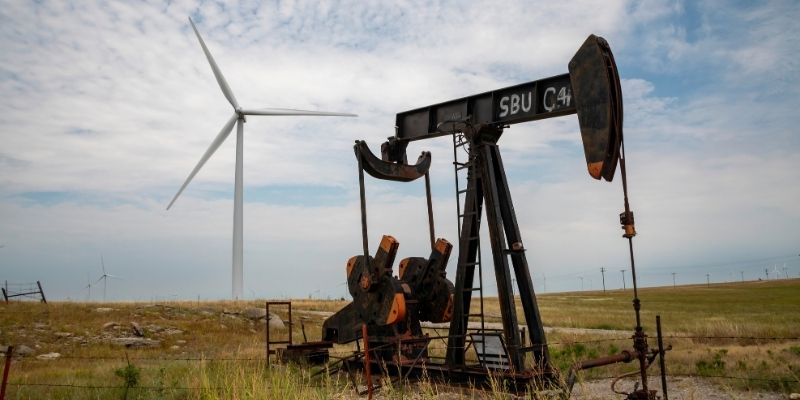
Focusing on a single peak date oversimplifies market dynamics. Even if demand peaks, it is likely to remain near that level for an extended period. For markets, sustained demand at high levels poses a greater risk to pricing and supply than the exact timing of a peak.
Investment Decisions and Market Risk
Markets move when expectations don't match reality. If energy companies cut investment, expecting demand to collapse, but demand stays close to 105 million bpd, supply can tighten instead of easing.
This can make prices swing more, especially when maintenance or geopolitics temporarily reduce output. Contemporary oil market reports highlight this risk: underinvestment in new capacity can create volatility even in a world where demand growth slows.
This structural tension continues to shape crude oil market analysis and explains why price cycles remain sharp despite transition narratives.
Emerging Markets and the Shift Eastward
India and Southeast Asia are now the primary engines of global oil consumption trends through 2040. India is projected to be the single largest contributor to demand growth through the end of this decade as infrastructure investment and middle-class expansion accelerate [3].
When large populations move from subsistence living to urban environments, oil use increases across multiple areas:
- Freight and logistics
- Power generation support
- Construction materials
- Personal transport
China remains a complex case. Despite aggressive electric vehicle adoption, China's industrial sector still relies heavily on liquid fuels, lubricants, and petrochemical inputs [2]. Global demand growth has shifted toward emerging Asian economies rather than declining outright.
Infrastructure and Heavy Industry Constraints
Heavy transport remains among the hardest sectors to decarbonize. Current battery technology cannot meet the energy density requirements of:
- Long-haul aviation
- Global shipping
- Heavy freight trucking
These sectors alone provide a durable base for oil demand, largely independent of passenger vehicle electrification in select markets [4].
Industrial Dependence on Petroleum Products
Construction and manufacturing in developing regions require specialized petroleum products. Asphalt for roads and lubricants for machinery have no scalable alternatives today. Even if every passenger vehicle became electric, industrial activity would still require millions of barrels of oil each day.
These industrial uses create baseline demand that is largely insulated from changes in passenger vehicle technology.
Petrochemicals as a Core Growth Segment
Public discussion often equates oil demand with gasoline consumption, but petrochemicals represent the fastest-growing segment of the market. Plastics, fertilizers, textiles, and medical supplies all originate from petroleum byproducts [4].
As global living standards rise, demand for these products increases regardless of fuel trends. This makes petrochemical oil demand closely tied to GDP growth rather than vehicle usage.
Long-Term Capital Commitments
Petrochemical facilities involve multi-billion-dollar investments with operating lives extending beyond thirty years. Companies are building integrated refinery complexes designed to maximize chemical output rather than transport fuels. Such long-lived assets signal expectations of sustained feedstock demand over multiple decades.
Refinery Reconfiguration and Product Shifts
Refineries are adjusting to changing consumption patterns. Modern facilities can be configured to reduce the production of light transport fuels while increasing the output of naphtha and ethane for plastics manufacturing.
This transition allows the oil industry to adapt without reducing crude intake. The raw material requirement remains high even as end-use demand shifts.
Demand for petrochemical products tracks global economic conditions more closely than fuel prices. This helps explain why oil prices can remain firm even during periods of rapid renewable expansion.
Underinvestment and Supply Volatility
One of the most significant risks facing the oil market is underinvestment. Many producers have reduced capital expenditure for exploration and development in response to ESG pressures and shareholder demands [6].
If global oil demand remains near 100 million bpd through 2040, sustained investment is required simply to offset the natural decline in existing fields. Prolonged underinvestment tightens supply and amplifies price volatility.
Changing Role of U.S. Shale
U.S. shale production previously acted as a flexible supply buffer. That role is diminishing. Producers are prioritizing shareholder returns over output growth [6], reducing the availability of a rapid-response supply source.
Consequences of a Misjudged Transition
Physical energy markets can react strongly when forecasts miss the mark. If the shift toward renewables slows more than expected, real supply shortages become much more likely. The 2022 energy crisis showed how fast prices can spike when supply tightens, and inventories are low[3].
Even now, refiners in the U.S., Europe, and Asia are seeing higher margins because gasoline and diesel supplies are tighter than before. Margins in many regions have climbed to their highest levels since early 2024, partly because some refineries have closed or gone offline. These kinds of tightening signals usually show stress before headline crude prices move significantly.
Before prices jump, markets often shift on signals like:
refining margins
shortages of specific products
spreads between different crude grades
Watching these indicators closely can help traders and planners get ahead of price moves rather than reacting after the fact.
Common Errors in Market Interpretation
A common mistake is assuming renewable energy growth automatically translates into an immediate oil demand. Global energy demand is rising quickly, and much of the growth in renewable supply is meeting new consumption rather than replacing existing fuels.
Another oversimplification is focusing solely on crude prices in U.S. dollars. In many importing countries, currency depreciation raises effective energy costs even when global prices remain stable [6]. This dynamic shapes regional demand patterns without changing global totals.
Signals That Receive Too Much Weight
Weekly inventory data from the U.S. Energy Information Administration often drives short-term price movements but represents a limited portion of global supply [3]. These figures are frequently revised and offer limited long-term insight.
Political announcements regarding internal combustion engine bans often overstate near-term impact. Loopholes and cash limits always stall the progress. Physical oil demand responds to infrastructure availability and affordability rather than policy announcements.
Thinking About Oil Demand Through 2040
The energy transition is happening slowly. It's not just swapping oil for renewables overnight. Most of the world's transport, factories, and shipping were built around oil, and changing all that takes time and money.
Even with more solar and wind coming online, planes, ships, big trucks, and some factories still need liquid fuels that work reliably over long distances. These uses create a baseline demand that won't disappear anytime soon.
One big reason oil sticks around is energy density. A barrel of oil holds a lot of energy in a stable, easy-to-store form. Batteries and other alternatives have improved, but very few can match oil when it comes to carrying lots of power efficiently at scale.
Cost matters too. In many developing countries, keeping energy affordable is more important than hitting emissions targets. Until alternatives can provide the same energy at prices people can afford without massive subsidies or new infrastructure, oil keeps its advantage.
Because of all this, global oil demand is likely to stay near today's levels for years. Outlooks from the U.S. Energy Information Administration show inventories and prices will keep moving around 100 million barrels per day, even as production grows faster than demand.
Oil demand isn't staying high just because people resist change. It reflects real physical and economic limits. Efficiency and electrification can slow growth, but they don't erase the need for oil. As long as the world cares about reliability, cost, and usable energy, that 100 million barrels per day mark will probably stick around for a long time.
What to Watch Going Forward
Investment trends among state-owned producers merit close attention. While Western companies reduce exposure, national oil companies in Saudi Arabia, the UAE, and Guyana are expanding capacity [1][6]. Control over marginal supply is shifting accordingly.
Pumping cash into tired oil fields is a big clue. These bets try to keep crude flowing now instead of hunting new spots; this proves oil stays put instead of fading. The dream of a clean world without fuel is catchy, but hard numbers say the opposite today. Markets are banking on a long haul where fossil fuel and renewable energy systems operate in parallel. Seeing oil used this way paints a real look at future costs and global power messes ahead.
References
[1] OPEC World Oil Outlook 2024 – https://woo.opec.org/
[2] IEA World Energy Outlook 2024 – https://www.iea.org/reports/world-energy-outlook-2024
[3] EIA International Energy Outlook 2023/2024 – https://www.eia.gov/outlooks/ieo/
[4] IEA – The Future of Petrochemicals: Analysis and Projections to 2050 - https://www.iea.org/reports/the-future-of-petrochemicals
[5] World Bank: Commodity Markets Outlook – https://www.worldbank.org/en/research/commodity-markets
[6] BP Energy Outlook 2024 – https://www.bp.com/en/global/corporate/energy-economics/energy-outlook.html
Share this article:
Recommended For You





Most Viewed


ADVERTISEMENT